Pheochromocytoma Treatment Cost In India
Unlock Exclusive Discount : Your Gateway to Premium Healthcare with Medsurge India Health Value Card.

Unlock Exclusive Discount : Your Gateway to Premium Healthcare with Medsurge India Health Value Card.
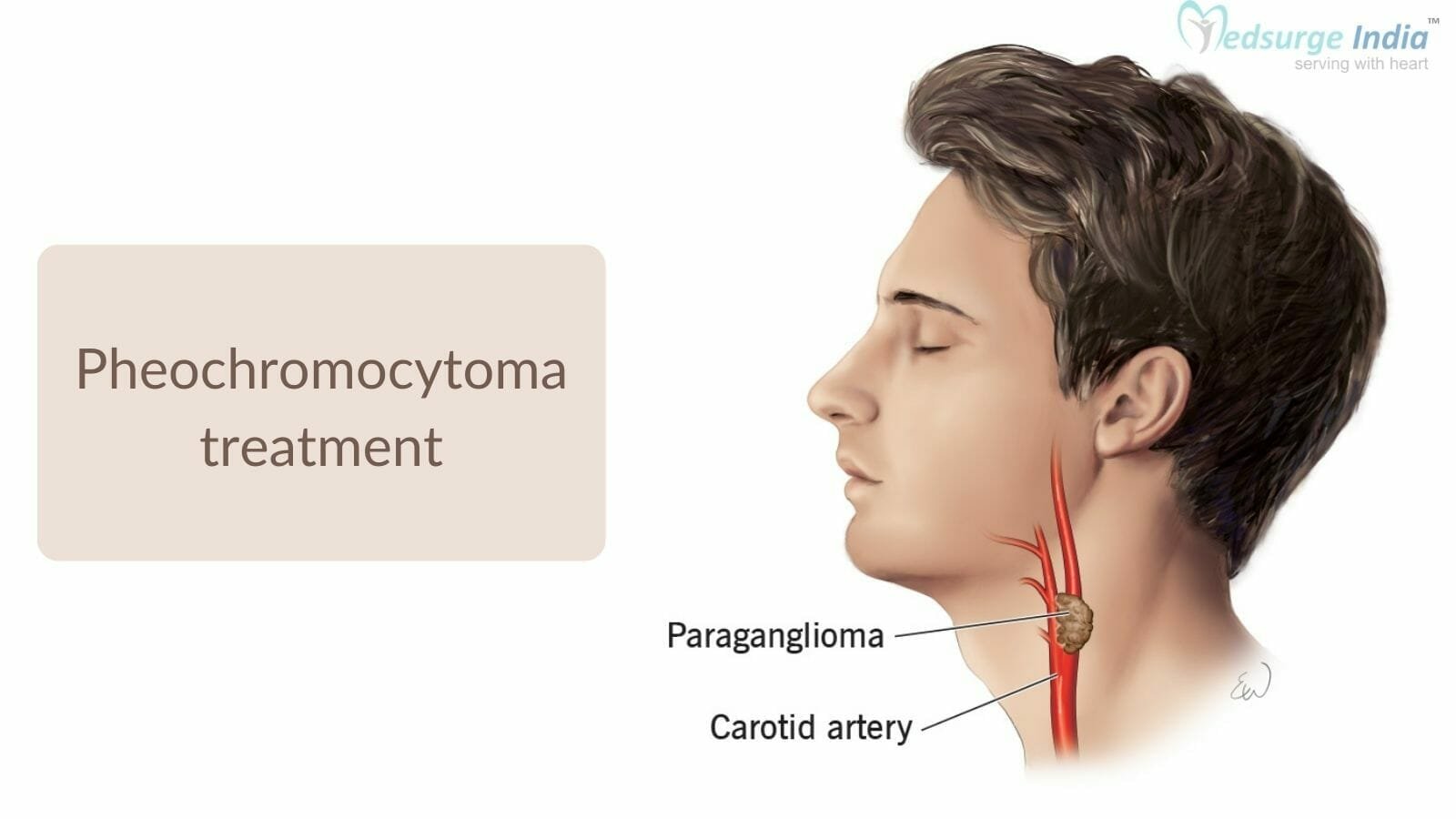
Rare cancers like paraganglioma and pheochromocytomas originate from the same type of tissue. A rare tumor that develops in the adrenal medulla is called pheochromocytoma (the center of the adrenal gland). Adrenal glands are not where paragangliomas develop. The probability of developing pheochromocytoma or paraganglioma is increased by some inherited diseases and mutations in specific genes. The pheochromocytoma treatment in India majorly involves surgery and PRRT therapy. The treatment plan is discussed after genetic counseling.
The pheochromocytoma treatment cost in India depends upon the type of therapy recommended by the specialist and the genetic factor of the patient.
The adrenal medulla plays an instrumental role in synthesizing and secreting catecholamines – hormones such as epinephrine (adrenaline) and norepinephrine (noradrenaline). These hormones are released when the body is under stress to start the defense mechanism, which quickly changes the body’s physiology by increasing the heart rate and the blood supply to vital organs. These hormonal effects happen instantly. The usual equilibrium of the body’s stress response hormones is disturbed by pheochromocytomas’ excessive production of catecholamines. Although the majority of pheochromocytomas form in the adrenal medulla, they can also appear in other regions that produce catecholamines, such as the belly, pelvis, chest, and neck.
Signs and symptoms of Pheochromocytoma frequently include:
Less common signs or symptoms may include:
The signs and symptoms of pheochromocytoma might be ongoing, sporadic, weaker, or constant. These episodes can be triggered by certain situations or behaviors, meals high in tyramine, a compound that influences blood pressure, and drugs.
Researchers don’t know exactly what causes a pheochromocytoma. In the middle of the adrenal gland, there are specialized cells known as chromaffin cells where the tumor grows. These cells release several hormones, particularly adrenaline (epinephrine) and noradrenaline (norepinephrine). These hormones regulate numerous bodily functions, including heart rate, blood pressure, and blood sugar.
The body’s defense mechanism to a potential threat is triggered by the hormones adrenaline and noradrenaline. The hormones cause blood pressure to increase and the heart to beat faster. They put other bodily functions in motion so you can respond swiftly. A pheochromocytoma causes more of these hormones to be released, and it causes them to be released when you’re not in a threatening situation.
Adrenal glands contain the majority of chromaffin cells. However, there are also little clusters of these cells in the heart, head, neck, bladder, abdominal wall, and throughout the spine. Paragangliomas are chromaffin cell tumors that develop outside of the adrenal glands. They might have the same impact on the body as a pheochromocytoma.
The following tests that examine the blood and urine are used to diagnose pheochromocytoma and paraganglioma:
Genetic counseling should be provided to all patients who have been diagnosed with pheochromocytoma or paraganglioma in order to determine their risk of developing an inherited disease and other cancers that are connected.
A genetic counselor may suggest genetic testing for patients who:
For individuals with pheochromocytoma, genetic testing is occasionally advised if they:
It is not advised to perform genetic testing on patients older than 50.
The average Pheochromocytoma Treatment Cost in India starts from USD 4500. Several factors have a direct impact on the cost of Pheochromocytoma Treatment in India. The method of your treatment used to carry out the procedure will determine the cost of your Pheochromocytoma Treatment in India.
Below are the average cost of Pheochromocytoma Treatment in different cities in India:
| Cities | Starting Prices |
| Delhi | USD 4500 |
| Noida | USD 4600 |
| Gurgaon | USD 4800 |
| Bangalore | USD 5000 |
| Chennai | USD 4500 |
| Kolkata | USD 4600 |
| Mumbai | USD 4900 |
| Hyderabad | USD 4600 |
Note: A number of variables will affect the treatment’s cost.
Standard of medical care and services is on par with the world’s top hospitals in terms of quality and standard. Regardless of deducting the cost of lodging, meals, and transportation. The following factors may impact Pheochromocytoma Treatment Cost in India:
Patients and medical professionals can successfully negotiate and make decisions that meet their needs and preferences by being aware of these variables.
Know More – Role of PRRT Therapy in Cancer Treatment
When paraganglioma or pheochromocytoma is discovered, pharmacological therapy is commenced for the treatment of pheochromocytoma in India. This could include:
For treating pheochromocytoma in India, six types of standard treatments are used:
Adrenalectomy is typically the procedure used to remove pheochromocytoma (removal of one or both adrenal glands). The tissues and lymph nodes inside the abdomen will be examined during the procedure, and if the tumor has spread, these tissues may also need to be removed. To maintain normal blood pressure and heart rate throughout and after surgery, medications may be used.
High-energy x-rays or other types of radiation are used in radiation therapy, a cancer treatment, to either kill or stop the growth of cancer cells. Two types of radiation therapy exist:
131I-MIBG, which delivers radiation directly to tumor cells, is frequently used to treat metastatic pheochromocytoma. Certain types of tumor cells absorb 131I-MIBG, a radioactive material, and the radiation it emits kills the tumor cells. 131I-MIBG is administered intravenously. Before starting treatment, a test is performed to see if the pheochromocytoma will take up 131I-MIBG because not all pheochromocytomas accept it.
A possible treatment for metastatic and/or incurable paraganglioma (PPGL) and pheochromocytoma is 177Lu-DOTATATE-based peptide receptor radionuclide therapy (PRRT). The aim is to evaluate the efficacy and safety of and identify predictors of response to 177Lu-DOTATATE therapy in minimizing metastatic and/or inoperable PPGL.
Chemotherapy is a type of cancer treatment that employs medications to kill cancer cells or prevent them from proliferating in order to stop the growth of cancer cells. Chemotherapy enters the bloodstream whether administered orally or through an injection into a vein or muscle, where it can reach cancer cells throughout the body (systemic chemotherapy). Multiple anticancer medications are used during combination chemotherapy. Treatment for paragangliomas and pheochromocytomas involves systemic chemotherapy.
You can take medication to help replace the hormones that your body won't be able to produce any longer if your doctor removes both of your adrenal glands. Whatever your course of therapy, you'll need to visit your doctor frequently to ensure that PCC doesn't reoccur. They can also help you in dealing with any treatment-related long-term side effects.
An estimated 95% of those who are diagnosed with a malignant form of pheochromocytoma that hasn't metastasized to other parts of the body survive for at least another five years. 34 to 60 % survive at least 5 years following diagnosis if the tumors have spread or returned after treatment.
A: It has been demonstrated that the beta-adrenergic blocker labetalol (Trandate, Normodyne), a selective alpha-adrenergic blocker and non-cardioselective beta-adrenergic blocker, is useful in reducing pheochromocytoma-related hypertension.
A: The five-year survival percentage for patients with a small pheochromocytoma that has not migrated to other body areas is around 95%. Patients with pheochromocytoma that have migrated to other areas of the body or grown back (recurred) have a five-year survival rate between 34 and 60%.
A: Foods high in tyramine, a substance that affects blood pressure, also can make symptoms worse. Tyramine is common in foods that are fermented, aged, pickled, cured, overripe, or spoiled. These foods include cheese also.
A: It might always be high or just occasionally. Sometimes a tumor can result in life-threateningly high blood pressure. It is an extremely unusual reason for high blood pressure. However, it must be taken into account when medication is insufficient to control high blood pressure.
A: To remove the adrenal gland tumor, surgeons must create a significant abdominal incision during open surgery. If a patient has abdominal scar tissue, which can make minimally invasive procedures more challenging, open surgery may be used. Large malignant adrenal tumors may also be removed with open surgery.
General Surgeon
Senior Consultant
12 years
Care Hospital, Banjara Hills, Hyderabad
View Doctor
General Surgeon
Associate Consultant
3+ years
Care Hospital, Banjara Hills, Hyderabad
View Doctor

General Surgeon, Laparoscopic Surgeon
Consultant
11+ years
N/A
View Doctor
General Surgeon, Laparoscopic Surgeon
Senior Consultant
32+ years
N/A
View Doctor
General Surgeon, Laparoscopic Surgeon
Consultant
15+ years
Akropolis Super Speciality Hospital
View Doctor




By using our site, you agree to our Terms and Conditions, Privacy Policy and Refund Policy. Medsurge India provides reliable healthcare information and treatment options to support informed decision-making. Our content is designed to support and complement the guidance of your treating doctor, helping you feel informed and confident throughout your healthcare journey. We also Accept International Payments.

Copyright © 2025 NSM ONLINE SOLUTIONS PRIVATE LIMITED. All rights reserved.

 (1).png)