Radioactive Iodine Therapy Cost in Turkey
Unlock Exclusive Discount : Your Gateway to Premium Healthcare with Medsurge India Health Value Card.

Unlock Exclusive Discount : Your Gateway to Premium Healthcare with Medsurge India Health Value Card.
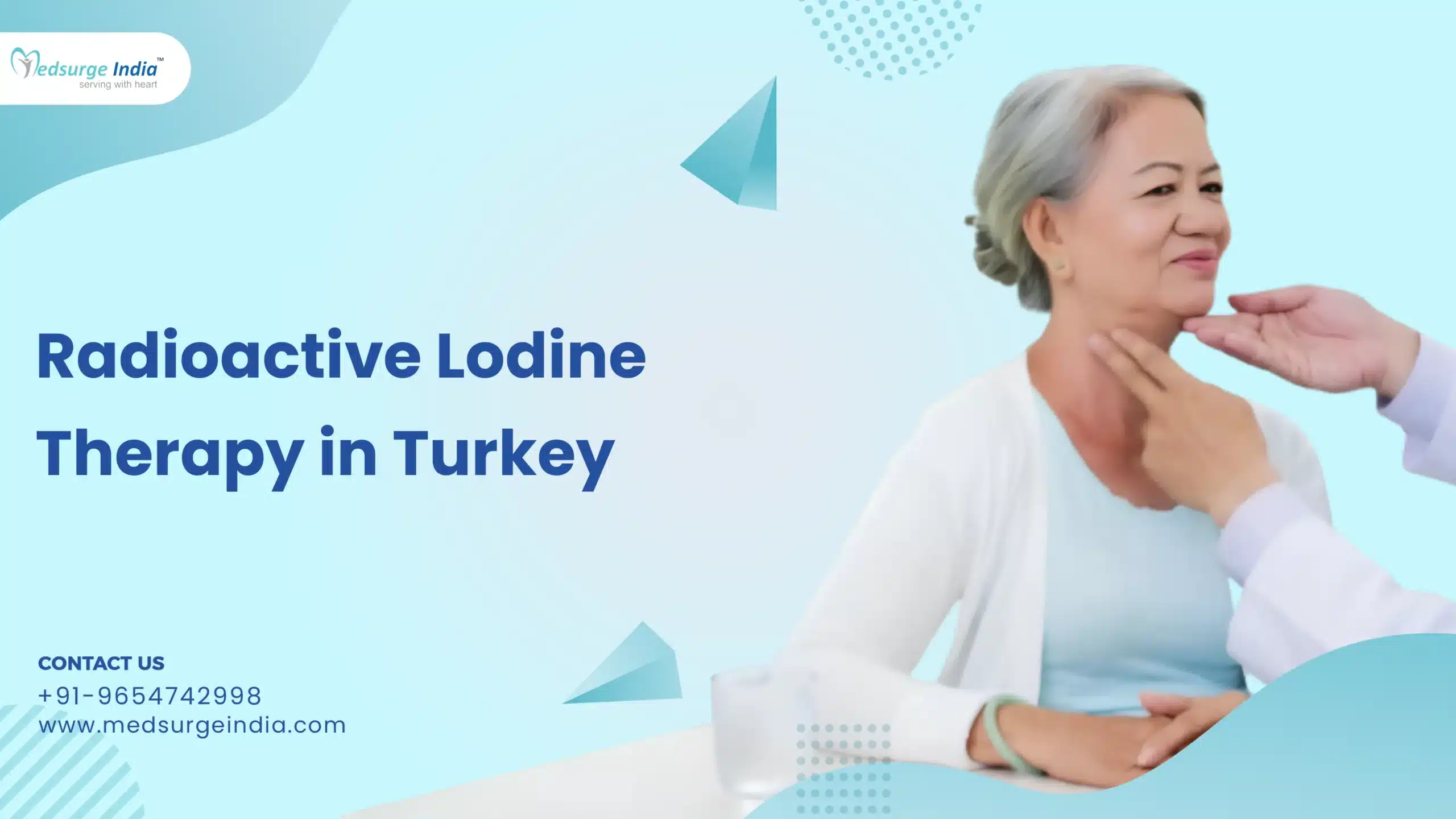
The thyroid gland is responsible for absorbing nearly all the iodine present in the body. Consequently, radioactive iodine I-131 is utilized in the treatment of thyroid cancer. Radioactive iodine therapy is a highly effective method for addressing hyperthyroidism and thyroid cancer. Thyroid cells uniquely absorb significant amounts of iodine, allowing for the oral administration of the radioactive isotope. Once ingested, the radioactive iodine is selectively absorbed by the cancerous cells, leading to their destruction.
Turkey is home to numerous hospitals renowned for their expertise in radioiodine therapy for thyroid cancer treatment. A key benefit of this radiotherapy is its ability to specifically target thyroid cells, minimizing impact on normal cells throughout the body.
Radioactive Iodine Therapy Cost in Turkey ranges from INR 2,16,000 to INR 4,48,000 ($2,500 to $5,200). The cost of radioactive iodine therapy will depend on the dosage an individual may require.
| Cities | Prices |
| Istanbul | $2,500 to $5,500 |
| Antalya | $2,300 to $5,200 |
| Izmir | $2,200 to $5,200 |
| Ankara | $2,700 to $5,500 |
Various elements can affect the expenses associated with radioactive iodine therapy cost in Turkey. Below is a more comprehensive overview:
Radioactive iodine therapy is a nuclear medicine procedure that utilizes radioactive iodine to destroy thyroid tissue or cancerous cells. The patient takes a pill containing radioactive iodine, which is absorbed by the thyroid cells, leading the gland to effectively eliminate its own cells.
This therapy may be recommended for individuals with specific thyroid conditions, including:
Thyroid cancer: It is commonly used to treat differentiated thyroid cancers, such as papillary and follicular types. Typically, it is administered after a thyroidectomy, which is the surgical removal of the thyroid gland, to eliminate any remaining cancerous cells that may not have been completely removed during surgery.
Hyperthyroidism: Radioactive iodine therapy is an effective treatment for hyperthyroidism, a condition marked by the overproduction of thyroid hormones. This condition is often linked to Graves’ disease, an autoimmune disorder. The radioactive iodine targets and destroys the overactive thyroid cells, reducing hormone production and helping to restore normal thyroid function.
Recurrent or metastatic thyroid cancer: In instances where thyroid cancer returns or spreads to other parts of the body, radioactive iodine therapy can be used to specifically target and eliminate cancer cells in those areas.
The choice to proceed with radioactive iodine therapy depends on various factors, including the type and stage of the thyroid condition, the presence of cancerous cells, and the patient’s overall health. A multidisciplinary team of healthcare professionals, including endocrinologists, oncologists, and nuclear medicine experts, will evaluate the patient’s unique situation.
Note: It is important to know that not everyone with thyroid disorders will require radioactive iodine therapy. The treatment plan will be customized based on the specific diagnosis, the severity of the condition, and individual health factors. Seeking advice from a healthcare professional is vital for an accurate evaluation and suitable treatment options.
For radioactive iodine therapy to be most effective, it is crucial to keep thyroid-stimulating hormone (TSH or thyrotropin) levels elevated in the bloodstream. This hormone aids in the absorption of radioactive iodine by thyroid cells, including those affected by cancer.
When the thyroid has been surgically removed, there are two main strategies to boost TSH levels prior to radioactive iodine therapy.
Patients receiving thyroid hormone replacement therapy can stop their medication for several weeks. This induces a state of hypothyroidism (markedly low thyroid hormone levels), which triggers the pituitary gland to produce more TSH. While this temporary hypothyroidism can lead to symptoms such as fatigue, depression, weight gain, constipation, muscle discomfort, and reduced concentration, it is a necessary step.
Another approach to raising TSH levels is through the use of synthetic thyrotropin (Thyrogen) injections. This treatment involves two consecutive days of intramuscular injections, with radioactive iodine therapy occurring on the third day. A significant advantage of this method is that it allows patients to continue their thyroid hormone therapy without any interruptions.
Healthcare providers typically recommend adhering to a low-iodine diet for one to two weeks before treatment. This diet generally involves limiting or avoiding foods that contain iodized salt and red dye #3, as well as dairy products, eggs, seafood, and soy.
Patients usually take radioactive iodine orally, available in either capsule or liquid form. This iodine is quickly absorbed by the thyroid gland, which has a natural affinity for iodine. The radiation emitted by the iodine effectively targets and destroys thyroid cells, including those that are cancerous or overactive.
After receiving the treatment, patients are typically required to stay in the hospital for a specific period to minimize radiation exposure to others. This is important because the patient will emit radiation as their body processes and eliminates the radioactive iodine. During this time, certain precautions are taken to safeguard both the patient and those nearby from unnecessary radiation exposure.
Following the therapy, patients are regularly monitored to assess the effectiveness of the treatment and evaluate thyroid function. In some cases, additional doses of radioactive iodine therapy may be needed based on the specific condition being addressed.
Medsurge India is a reputable medical tourism provider that has successfully supported thousands of patients worldwide. Our primary goal is to identify the most suitable medical solutions tailored to your specific needs, offering a curated list of qualified and esteemed doctors and hospitals to address your health concerns.
We also develop a treatment plan that aligns with your financial considerations. Furthermore, we aid patients in securing travel permits, medical visas, and other necessary documentation. If you or a loved one are seeking radioactive iodine therapy in India, please feel free to reach out to us.
A: RAI is often administered at a hospital or outpatient clinic in a specialized radiology department known as nuclear medicine. It can be injected into a vein or given orally as a liquid or tablet. Additionally, you may be prescribed medication to avoid nausea. In most cases, just one therapy is required.
A: It is often painless, with the exception of intravenous injections. These tests aid in the diagnosis and evaluation of medical disorders by using radioactive substances known as radiopharmaceuticals or radiotracers. Molecules that have been "labeled" or connected to a trace amount of radioactive material are known as radiotracers.
A: The primary treatments for AFTN are surgery and the administration of radioactive iodine (RAI), but radiofrequency ablation (RFA) has recently been suggested as a substitute.
A: The thyroid gland absorbs the majority of the radiation, although during treatment, other organs like the breast and stomach are also exposed. The dose absorbed by an organ and the cancer death rate at that location were shown to have favorable dose-response associations by the researchers.
A: Acute side effects of RAI therapy include discomfort, swelling of the salivary glands, ageusia (taste loss), and nausea and vomiting.

Endocrinologist
Assistant Professor
23+ Years
Medicana Bursa Hospital, Ankara
View Doctor
Endocrinologist
Consultant
36+ Years
Medicana Bursa Hospital, Ankara
View Doctor
Endocrinologist
Consultant
30+ Years
Medicana Bursa Hospital, Ankara
View Doctor
Endocrinologist
Consultant
23+ Years
Medicana Bursa Hospital, Ankara
View Doctor
Endocrinologist
Consultant
11 years of experience
Medicana International Istanbul
View Doctor
Endocrinologist
Consultant
11 years of experience
Medicana International Istanbul
View DoctorEndocrinologist
Head of Department
39 years of experience
American Hospital, Istanbul
View DoctorEndocrinologist
Senior Consultant
40 years of experience
Acibadem Hospitals Group
View DoctorEndocrinologist
Professor
22 years of experience
Okan University Hospital, Tuzla
View Doctor
Endocrinologist
Associate Professor
23 years of experience
Hisar Hospital Intercontinental, Istanbul
View Doctor





By using our site, you agree to our Terms and Conditions, Privacy Policy and Refund Policy. Medsurgeindia does not provide medical advice, diagnosis, or treatment. The information provided on this site is designed to support, not replace, the relationship that exists between a patient/site visitor and his/her existing physician. We also Accept International Payments.
Copyright © 2025 NSM ONLINE SOLUTIONS PRIVATE LIMITED. All rights reserved.