Gestational Trophoblastic Disease Treatment Cost in India
Unlock Exclusive Discount : Your Gateway to Premium Healthcare with Medsurge India Health Value Card.

Unlock Exclusive Discount : Your Gateway to Premium Healthcare with Medsurge India Health Value Card.
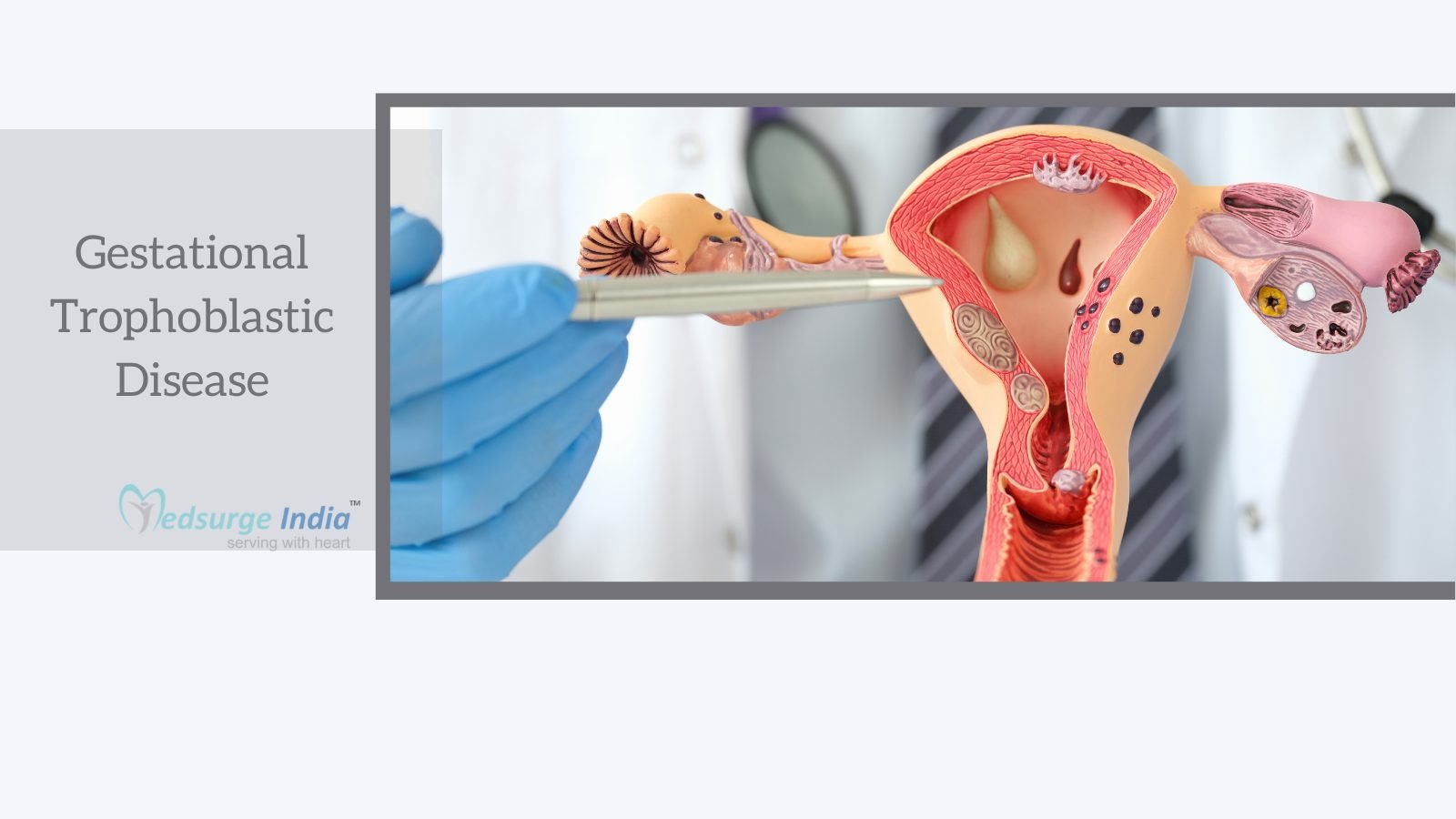
This is a group of rare cancers characterized by aberrant cell proliferation within a woman’s uterus. These begin in cells that would typically form the placenta during pregnancy. Gestational Trophoblastic Disease Treatment in India differs depending on the type of disease. Surgery, chemotherapy, and radiation therapy are usually used in conjunction.
The Gestational trophoblastic disease treatment cost in India is totally dependent upon the type of hospital selected by the patient for the treatment as well as the stage at which the tumor has progressed.
Choriocarcinoma is a form of gestational trophoblastic disease that occurs in the uterus of a woman. It is a collection of tumors that develop in a woman’s uterus. A tumor is an abnormal cell development in any portion of the body that may or may not contain cancer cells (malignant) or (benign). A GTD usually starts in the layer of trophoblast cells that surrounds an embryo (tropho means nutrition and blast indicates bud or early development). The placenta, the organ that shelters and nourishes the growing fetus, develops from this layer of trophoblast cells. The tumor can be malignant or non-cancerous and arises from the placenta in GTD. Therefore, Choriocarcinoma is a malignant variant of gestational trophoblastic disease.
GTD stands for gestational trophoblastic disease and refers to a variety of conditions:
Gestational Trophoblastic Neoplasia (GTN):
GTD symptoms can be similar to those of a normal pregnancy. They could resemble a spontaneous abortion, often known as a miscarriage, or an ectopic pregnancy. However, the following signs and symptoms of gestational Trophoblastic condition may indicate a problem:
Symptoms might appear weeks, months, or even years after a healthy pregnancy and delivery.
If a malignant GTD has migrated beyond the uterus at the time of diagnosis, further symptoms may appear depending on where the disease is located. In this situation, GTD could be misinterpreted as another medical problem.
For example, choriocarcinoma spreading to the brain might cause bleeding that can be misdiagnosed as a brain aneurysm. A blood test for human chorionic gonadotropin (hCG) can help the healthcare team better understand the condition.
Choriocarcinoma is rare cancer that develops as a result of an abnormal pregnancy. In this type of pregnancy, the baby may or may not develop.
Cancer can even develop after a healthy pregnancy. However, it is more common in full hydatidiform moles. At the start of a pregnancy, this is a growth that occurs inside the womb. Even after removal, the abnormal tissue from the mole can continue to grow and become malignant. About one-half of all women with choriocarcinoma had a hydatidiform mole or molar pregnancy.
Choriocarcinomas can also develop after an early failed pregnancy (miscarriage). They can also happen due to a genital tumor or an ectopic pregnancy.
The causes of GTD have a variety of reasons. Several risk factors linked to a woman’s pregnancy may raise her risk. They include:
The only way to avoid GTD is to avoid pregnancy. When making such family planning decisions, keep in mind that GTD is a rare occurrence. Prior abortion is not linked to the development of GTD. People who have had a molar pregnancy in the past or who are concerned about GTD for any reason should discuss their future risks with their doctors.
On average, Gestational Trophoblastic Disease Treatment Cost in India starts from USD 2500. The cost of the treatment will depend on the type of treatment you choose.
| Treatment | Starting Price |
| Surgery | USD 3100 |
| Chemotherapy | USD 800 |
| Radiation Therapy | USD 2800 |
| Targeted Therapy | USD 1100 |
| Cities | Starting Price |
| Delhi | USD 2500 |
| Gurgaon | USD 2500 |
| Noida | USD 2500 |
| Mumbai | USD 2500 |
| Hyderabad | USD 2500 |
| Chennai | USD 2500 |
| Kolkata | USD 2500 |
| Bangalore | USD 2500 |
Note: Do remember that the pricing and the treatment for Gestational Trophoblastic Disease Treatment cost in India will vary depending on the patient’s choice and other various factors.
The following here are some variables that can affect Gestational Trophoblastic Disease Treatment Cost in India:
Furthermore, even the standard and grade of medical care and amenities are comparable to those of the most prestigious healthcare facilities in the world, even when the expense of lodging, meals, and transportation is taken out. Also, under the direction of the most skilled physicians, Medsurge India provides patients with the lowest Gestational Trophoblastic Disease Treatment Cost in India.
A biopsy is the only sure technique for a doctor to determine whether a tumor is cancerous in most cases. A biopsy is when a doctor extracts a small sample of tissue for laboratory testing. If a biopsy is not possible, the doctor may recommend further tests to aid in the diagnosis of GTD.
When choosing a diagnostic test, your doctor may consider the following factors:
You should see a doctor who is either an oncologist or a gynecologist to get a correct diagnosis of GTD. Patients are frequently followed by a multidisciplinary team that includes an oncologist, a gynecologist, physiotherapists, and psychologists. Your treatment will be determined by your GTD stage.
GTD is usually curable, especially if detected early. Surgery and/or chemotherapy are the most common treatments for Gestational Trophoblastic Disease. The most frequent types of GTD therapies are listed below. Treatment for symptoms and side effects may be part of your treatment plan, which is an important element of medical care.
The type, stage, and risk category of GTD, as well as the patient's preferences and overall health, all influence treatment options and recommendations. Three types of standard treatments are used by doctors are following:
Surgery: During an operation, the tumor and some surrounding healthy tissue are removed. It is frequently the primary and, in some cases, the only treatment for a molar pregnancy. The operation is usually performed by a gynecologist or gynecologic oncologist who specializes in eliminating tumors through surgery. The extent of surgery for GTD is determined by the tumor's stage. Surgical procedures include:
Chemotherapy: Chemotherapy is a type of systemic therapy that is used to treat GTD. Chemotherapy is the use of medications to kill tumor cells by preventing them from growing, dividing, and producing new ones. Chemotherapy is usually highly effective in the treatment of molar pregnancy and certain types of gestational trophoblastic neoplasia (GTN). Chemotherapy is sometimes used alone, and other times it is used in combination with surgery.
Radiation Therapy: Radiation therapy is a cancer treatment that involves the use of high-energy x-rays or other forms of radiation to kill or stop cancer cells from developing. Radiation therapy is divided into two types:
The type of gestational trophoblastic disease being treated determines how radiation therapy is administered. The treatment for the trophoblastic disease is external radiation therapy.
The medications used to treat GTD are under constant review. The best approach to understand the prescriptions given for you, their purpose, and any potential adverse effects or combinations with other medications is to speak with your doctor. It's also crucial to inform your doctor if you're taking any additional medications or supplements, whether prescription or over-the-counter. Herbs, vitamins, and other pharmaceuticals can interact with tumor-treating medications, resulting in terrible side effects or decreased efficacy.
A: The majority of GTD is benign (non-cancerous) and does not spread, but some forms can turn malignant (cancerous) and spread to surrounding tissues or distant sections of the body.
A: Treatment for gestational trophoblastic disease and recurring disease GTD is a treatable condition. Women with hydatidiform moles have a good prognosis and rarely require treatment, but women with GTN have a good prognosis but must be treated.
A: Following GTD treatment, you may be concerned about future pregnancies. Although there is a higher risk of recurring GTD, most women who have previously been treated for GTD have normal pregnancies. All subsequent pregnancies in women who have had GTD must be closely monitored.
A: Six months after molar pregnancies, women with high but declining human chorionic gonadotropin (hCG) concentrations can be treated with chemotherapy.
A: Yes, you have a good possibility of becoming pregnant and having a healthy child again. The chances of another molar pregnancy are slim (about 1 in 80). It's advisable not to try to conceive again until you've completed all of your follow-up treatment. This will take roughly 6 months for most ladies.

Surgical Oncologist
Senior Consultant
12+ Years
BLK Max Super Speciality Hospital, New Delhi
View Doctor
Medical Oncologist
Associate Consultant
10+ years
Meitra Hospital, Calicut, Kerala
View Doctor
Radiation Oncologist
Senior Consultant
10+ years
Apollo Proton Cancer Centre, Chennai
View Doctor
Surgical Oncologist
Senior Consultant
8+ years
Meitra Hospital, Calicut, Kerala
View Doctor

Medical Oncologist
Consultant
15+ years
Care Hospitals HITEC City
View Doctor
Surgical Oncologist
Sr. Consultant & Associate Clinical Director
20+ years
Care Hospitals HITEC City
View Doctor
Surgical Oncologist
Senior Consultant
13+ years
Care Hospitals HITEC City
View Doctor
Surgical Oncologist
Senior Consultant & Head of the Department
22+ years
Care Hospitals HITEC City
View Doctor
Surgical Oncologist
Senior Director
15+ years
Fortis Hospital, Vasant Kunj, Delhi
View Doctor



By using our site, you agree to our Terms and Conditions, Privacy Policy and Refund Policy. Medsurge India provides reliable healthcare information and treatment options to support informed decision-making. Our content is designed to support and complement the guidance of your treating doctor, helping you feel informed and confident throughout your healthcare journey. We also Accept International Payments.

Copyright © 2025 NSM ONLINE SOLUTIONS PRIVATE LIMITED. All rights reserved.

 (1).png)