Renal Angiography Cost in India
Unlock Exclusive Discount : Your Gateway to Premium Healthcare with Medsurge India Health Value Card.

Unlock Exclusive Discount : Your Gateway to Premium Healthcare with Medsurge India Health Value Card.
Know Your Treatment Cost
Fast Response · No Hidden Charges
🔒 Response within 24hr
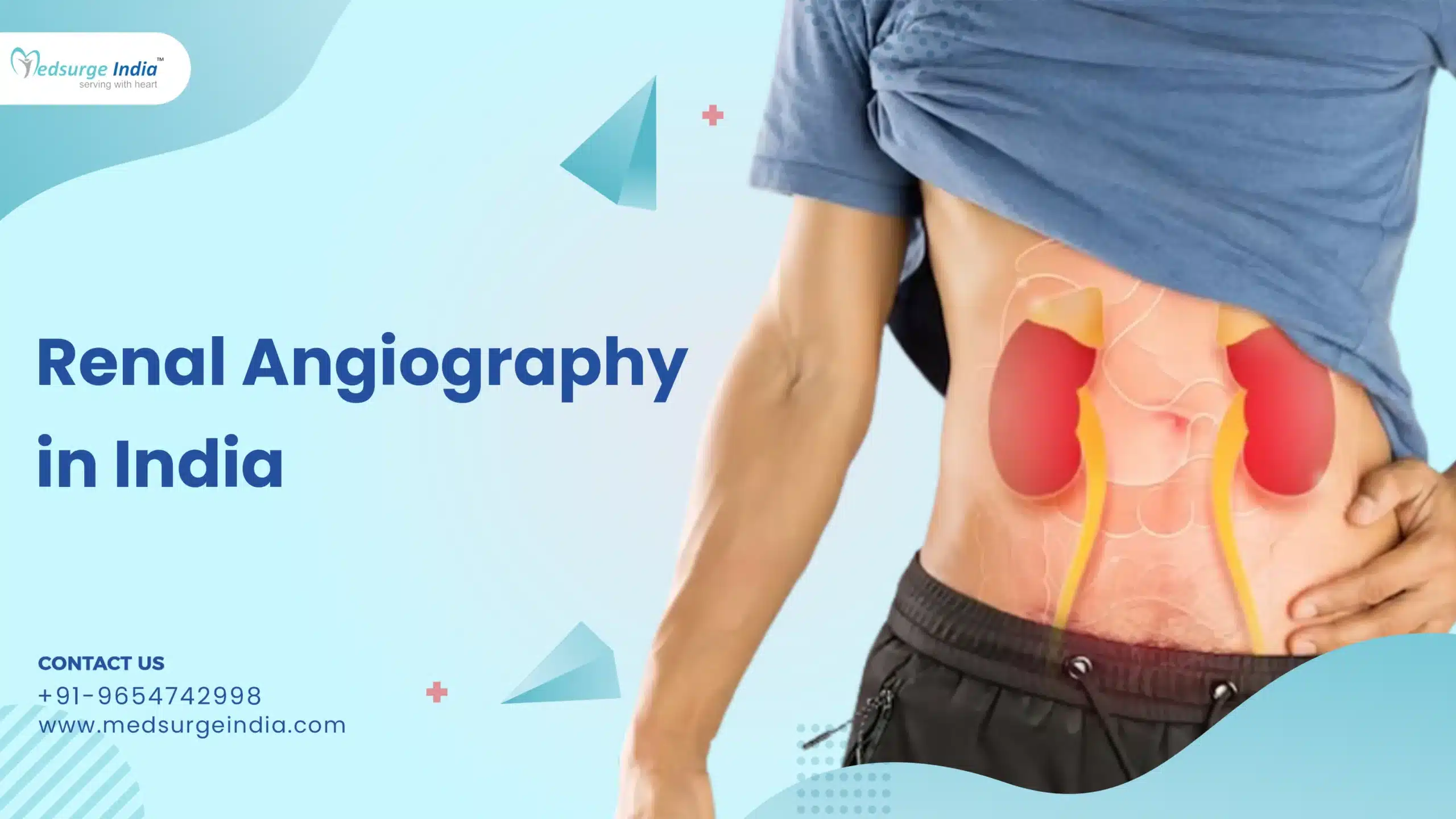
Renal Angioplasty is a medical procedure used to treat renal artery stenosis. During this process, a catheter with a small balloon or stent at the end is inserted into the renal artery to keep it open and improve blood flow to the kidney. This minimally invasive procedure is performed to widen the artery, which may have narrowed due to plaque buildup from fats and cholesterol. Diagnostic assessments such as angiography, magnetic resonance angiography, computed tomography angiography, and duplex Doppler ultrasonography are used to determine if a patient requires this procedure and to identify any blockages in the renal artery.
Renal Angioplasty cost in India on average starts from 150 USD. The cost can be higher depending on other conditions also. It is essential to consult your doctor for additional information regarding the factors that could impact the expenses.
A renal angiogram is a procedure applied to evaluate the status of blood vessels in your kidneys. Your healthcare provider can use it to visualize the expansion of a blood vessel (aneurysm), constriction of a blood vessel (stenosis), or obstruction in a blood vessel. He or she can also see how effectively blood is circulating to your kidneys.
During the test, the radiologist puts a small tube into the blood vessel that supplies blood to the kidney and injects a contrast dye. This is followed by X-ray images so that they can observe the movement of the dye through the blood vessels of the kidney. X-rays involve the application of a minimal amount of radiation to produce images of the bones and the internal organs. X-ray is a one category and renal angiogram is a specific example of X-ray. A renal angiogram involves the use of fluoroscopy. Fluoroscopy can be defined as a kind of X-ray motion picture.
A person might require a renal angiogram if your doctor needs to locate issues concerning the blood vessels of the kidneys in your body. These problems may include:
You may also need a renal angiogram to help your provider diagnose:
In some cases, a renal angiogram might be necessary if another imaging test like a CT scan or MRI is inconclusive for your doctor. There may be other reasons why your healthcare provider may refer you to have a renal angiogram done.
The cost of treating Renal Angiography in India can fluctuate based on various factors. Typically, treatment expenses for Renal Angiography in India can range from as low as 120 USD to as high as 480 USD.
| Country | Price Starting From |
| India | 120 USD |
| US | 300 USD |
| UK | 300 USD |
| UAE | 240 USD |
Some of the possible factors influencing Renal Angiography cost in India can vary depending on various factors. The following are among the aspects that may influence Renal Angiography cost in India.
Trusted Care. Better Results.
Get advanced renal angiography treatment in India with expert kidney specialists and complete patient support.

The procedure has various steps:
Like any other interventional procedure, renal angioplasty is not risk-free; some of the common risks include; damage to the renal artery, blood clotting or bruising where the catheter enters the body, bleeding around this area, and in some instances stents may be misplaced or the patient may have an allergic reaction to the contrast agents used during the procedure.
Restenosis is a common occurrence following surgery for renal stenosis, where the renal artery becomes blocked once more after several years. This condition primarily impacts individuals with severely narrow arteries, those aged 65 and older, women who are more susceptible to restenosis, as well as individuals who engage in habits such as smoking and alcohol consumption


Nephrologist
Senior Consultant
15+ Years
TX Hospitals, Uppal, Hyderabad
View Doctor
Nephrologist
Consultant
18+ years
Care Hospitals, Musheerabad, Hyderabad
View Doctor
Nephrologist
Senior Consultant
16+ years
Care Hospital, Health City, Visakhapatnam
View Doctor
Nephrologist
Consultant
15+ years
Care CIIGMA hospitals, dargarh road, Aurangabad
View Doctor


Nephrologist
Consultant
12+ years
Care Hospital, Banjara Hills, Hyderabad
View Doctor
Nephrologist
Clinical Director
34+ years
Care Hospital, Banjara Hills, Hyderabad
View Doctor
Nephrologist
Clinical Director and HOD
17+ years
Care Hospital, Bhubaneswar
View Doctor