Polycythemia Vera Treatment Cost in India
Unlock Exclusive Discount : Your Gateway to Premium Healthcare with Medsurge India Health Value Card.

Unlock Exclusive Discount : Your Gateway to Premium Healthcare with Medsurge India Health Value Card.
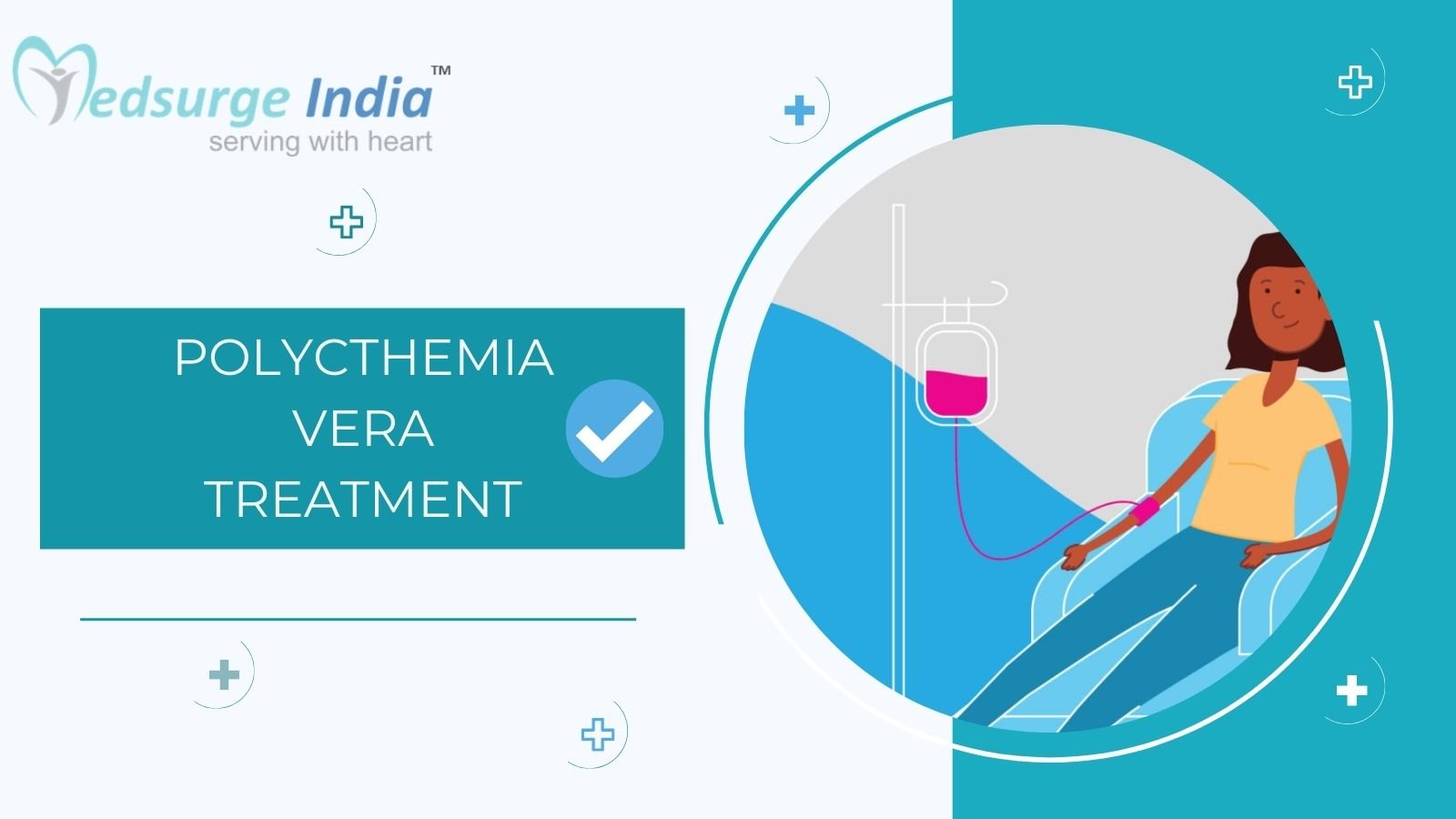
Polycythemia Vera (PV) is a chronic illness and although it cannot be cured, it is frequently efficiently treated for a very long time. By reducing the number of excess blood cells, treatment aims to lessen the risk of thrombosis and alleviate symptoms. In India, a variety of treatments are used to cure Polycythemia Vera by bringing down hematocrit levels. For the hematocrit concentration to remain within normal ranges, careful medical management and therapy are crucial. When compared to other industrialized countries like the US, America, etc., the cost of a Polycythemia Vera treatment in India is much more affordable. The success is largely due to the skill of the hematologist and the oncologist as well as the state-of-the-art medical equipment used at the best hospitals in India.
An uncommon form of blood cancer called polycythemia vera (PV) occurs when your body makes an excessive amount of red blood cells. Your blood thickens and flows more slowly when you have an excessive amount of red blood cells. Within your blood arteries, the red blood cells have the potential to aggregate and form clots. PV can cause consequences that are life-threatening if it is not addressed. Your heart, brain, and other essential organs may receive less oxygen when your blood flows more slowly. A stroke or even death may result from a blood clot entirely blocking blood flow within a blood artery.
Leukemia, another kind of blood cancer, and myelofibrosis, a scarring of the bone marrow, are also long-term effects of PV. PV cannot be cured, however, medication can help you control your symptoms. In order to help avoid dangerous blood clots, your doctor may probably do routine blood tests and prescribe medication. If you have any symptoms of PV or are at risk for PV, it’s crucial to speak with your doctor.
The soft, spongy substance in the middle of your bones, known as bone marrow, is where polycythemia vera develops. Here, fresh blood cells develop. A single gene in a single bone marrow stem cell defect causes PV. Most frequently, a gene known as JAK2 is to blame. The faulty gene instructs the stem cell to continue its own self-replication. All of the replicated cells keep procreating until the abnormal cells in your bone marrow outnumber the healthy ones. The JAK2 gene mutation is often acquired rather than inherited from a family member. It happens at some point in your life for unexplained reasons. However, there have been a few instances where polycythemia vera has affected several family members.
Polycythemia Vera Treatment cost in India starts from INR 5,33,000 (6,400 USD). India offers healthcare at significantly lower costs as compared to other countries. Furthermore, the quality of the medical services and treatment provided there is on par with that of the best hospitals in the world and without accounting for travel, lodging, and food expenses.
Polycythemia Vera Treatment Cost in India might vary based on a variety of factors, including
Polycythemia Vera develops gradually. For years, the illness may not show any symptoms at all. The thick blood that results from PV is the cause of the signs and symptoms when they appear. The blood’s ability to transport oxygen to every region of your body is slowed by its thickness. Numerous bodily components won’t function normally if you don’t have enough oxygen. PV symptoms and indications include:
Your primary care physician could suggest that you see a hematologist if they suspect PV in you. A physician who focuses on identifying and treating blood-related illnesses and ailments is known as a hematologist. Blood tests may be used to identify PV in you. A complete blood count (CBC) is one of these tests, along with additional ones if necessary.
Complete Blood Count – A CBC is frequently the initial test done to identify PV. The CBC analyses several components of your blood. This test measures your levels of hemoglobin and hematocrit. Red blood cells need hemoglobin, an iron-rich protein, to transport oxygen from the lungs to the rest of the body. Your hematocrit determines how much space red blood cells take up in your blood. PV may be indicated by a high hematocrit or hemoglobin level. The CBC also measures the number of platelets, white blood cells, and red blood cells in your blood. Results that are abnormal might indicate PV, a blood problem, an infection, or another illness. People with PV may also have high white blood cell or platelet counts in addition to high red blood cell counts.
Other Blood Examinations –
Tests for Bone Marrow – Your bone marrow’s health can be determined via bone marrow testing. These tests also reveal if your bone marrow is producing enough blood cells normally. Aspiration and biopsy are the two bone marrow examinations. Your doctor uses a needle to aspirate a little quantity of fluid bone marrow. Through a bigger needle, your doctor takes a tiny sample of bone marrow tissue for a biopsy. Following that, the samples are looked at under a microscope. It can be a clue that you have PV if the tests reveal that your bone marrow is producing an excessive amount of blood cells.
No treatment exists for Polycythemia Vera (PV). Treatments, however, can aid in the management of the illness and its side effects. Procedures, medications, and other treatments are used to treat PV. To control the condition, you might require one or more therapies. Controlling symptoms and lowering the risk of consequences, including heart attacks and strokes, are the main objectives of PV treatment. The number of red blood cells and hemoglobin (a protein rich in iron) in the blood are both decreased as a result of photodynamic therapy. Your blood thickness will be closer to normal now.
Blood with a typical thickness travels through blood arteries more easily. This lessens the possibility of blood clots developing and leading to a heart attack or stroke. Regular blood thickness also guarantees that your body receives enough oxygen. Headaches, visual issues, and itching are a few indications and symptoms of PV that can be lessened by doing this. According to studies, treating PV significantly increases your chances of living a longer life. If at all feasible, the underlying cause of secondary polycythemia should be managed throughout treatment. For instance, if carbon monoxide exposure is the root cause, the objective is to identify and address the source of the carbon monoxide.

A process called phlebotomy involves drawing some blood from your body. A needle is put into one of your veins during this process. Through an airtight tube in a sterile bag or container, blood travels from the vein. The procedure is comparable to blood donation. Your red blood cell count has decreased after phlebotomy, and your blood thickness is beginning to return to normal. Until your hematocrit level approaches normal, a pint (1 unit) of blood is typically drawn every week. (Hematocrit, a measurement of the amount of room red blood cells occupy in your blood,) Phlebotomy may be required every several months.
Overactive bone marrow cells may be suppressed by radiation therapy. This assists in reducing your red blood cell count and maintaining more or less normal blood flow and thickness. Radiation therapy, however, might increase your risk of leukemia and other blood disorders.
To prevent your bone marrow from producing an excessive amount of red blood cells, your doctor may prescribe medication. These drugs include interferon-alpha and hydroxyurea as examples. A drug called hydroxyurea is frequently used to treat cancer. The number of platelets and red blood cells in your blood might be decreased by this medication. As a consequence, this medication aids in enhancing blood flow and bringing blood thickness closer to normal.
Your body naturally produces a chemical called interferon-alpha. PV can also be treated with it. Your immune system may combat hyperactive bone marrow cells as a result of interferon-alpha. This assists in reducing your red blood cell count and maintaining more or less normal blood flow and thickness.
To lower the risk of blood clotting, doctors frequently prescribe this over-the-counter medicine. Aspirin, taken in small doses daily, helps keep blood platelets from adhering to one another. It can also aid in easing hand and foot irritation symptoms. If you have stomach ulcers, it might not be a smart option because it's rough on the stomach and makes you more likely to bleed. You could be given additional treatment choices if your symptoms have gotten worse or if you have a history of thrombosis (blood clotting) and are thought to be at higher risk.
In some circumstances, a bone marrow transplant may be advised. Your medical professional will take into account a number of variables, including the seriousness of your ailment and the ability of your body to repair itself.
Medsurge India is a prestigious support system for patients looking for doctors, hospitals, and specialized treatments. We'll find the most suitable medical options for you. Regarding your medical issues, our team will give you a list of certified, reputable, and trusted doctors and hospitals. Additionally, we offer a treatment strategy that fits your budget. Apart, we assist patients with obtaining travel authorizations, medical visas, and a multitude of other things.
A1: Frequent blood draws performed with a needle in a vein are the most typical polycythemia vera therapy (phlebotomy). The process is the same as when giving blood. Your blood volume and the number of extra blood cells both drop as a result.
A2: PV, or polycythemia vera, is an uncommon kind of blood cancer. Although there is now no therapy for PV, the condition may be managed and you can live a long time with it.
A3: Foods high in fat should be limited if you have polycythemia vera since they can raise your risk of blood clots and inflammation. These include deep-fried dishes, desserts prepared with heavy creams or a lot of butter, poultry with the skin on, and red meat with fat.
A4: An effective method of preventing red blood cells from being produced is to use this mild form of chemotherapy. The most popular chemotherapeutic agent used to treat PV is hydroxycarbamide. You might have certain negative effects with this medication. These might include diarrhea, increased infections, or constipation.
A5: The most frequent cause of mortality in those with PV is blood clots. Blood clots can stop the flow of blood to crucial organs when they develop in blood arteries. This may result in potentially fatal consequences including a heart attack, stroke, or venous thrombosis.

Hematologist
Consultant
12+ Years
Care Hospital, Banjara Hills, Hyderabad
View Doctor
Hematologist
Associate Director
11+ Years of Experience
Max Super Speciality Hospital, Patparganj, New Delhi
View Doctor
Hematologist
Senior Consultant
15+ years of experience
Manipal Hospital, Panaji, North Goa
View Doctor
Hematologist
Senior Consultant
12+ years of experience
Manipal Hospital, Panaji, North Goa
View Doctor
Hematologist
Senior Consultant
20+ years of experience
KMC Hospital, Hampankatta, Mangaluru
View Doctor
Hematologist
Senior Consultant
42+ years of experience
NH Rabindranath Tagore International Institute of Cardiac Sciences, Kolkata
View Doctor
Hematologist
Senior Consultant
25+ years of experience
NH Rabindranath Tagore International Institute of Cardiac Sciences, Kolkata
View Doctor
Hematologist
Senior Consultant
14+ years of experience
NH Rabindranath Tagore International Institute of Cardiac Sciences, Kolkata
View Doctor
Hematologist
23+ years of experience
Narayana Superspeciality Hospital, Shibpur, Howrah
View Doctor
Hematologist
Senior Consultant
18+ years of experience
Narayana Multispeciality Hospital, Andul Road, Howrah
View Doctor





By using our site, you agree to our Terms and Conditions, Privacy Policy and Refund Policy. Medsurge India provides reliable healthcare information and treatment options to support informed decision-making. Our content is designed to support and complement the guidance of your treating doctor, helping you feel informed and confident throughout your healthcare journey. We also Accept International Payments.

Copyright © 2025 NSM ONLINE SOLUTIONS PRIVATE LIMITED. All rights reserved.

 (1).png)