RIRS Surgery Cost in India
Unlock Exclusive Discount : Your Gateway to Premium Healthcare with Medsurge India Health Value Card.

Unlock Exclusive Discount : Your Gateway to Premium Healthcare with Medsurge India Health Value Card.
Know Your Treatment Cost
Fast Response · No Hidden Charges
🔒 Response within 24hr
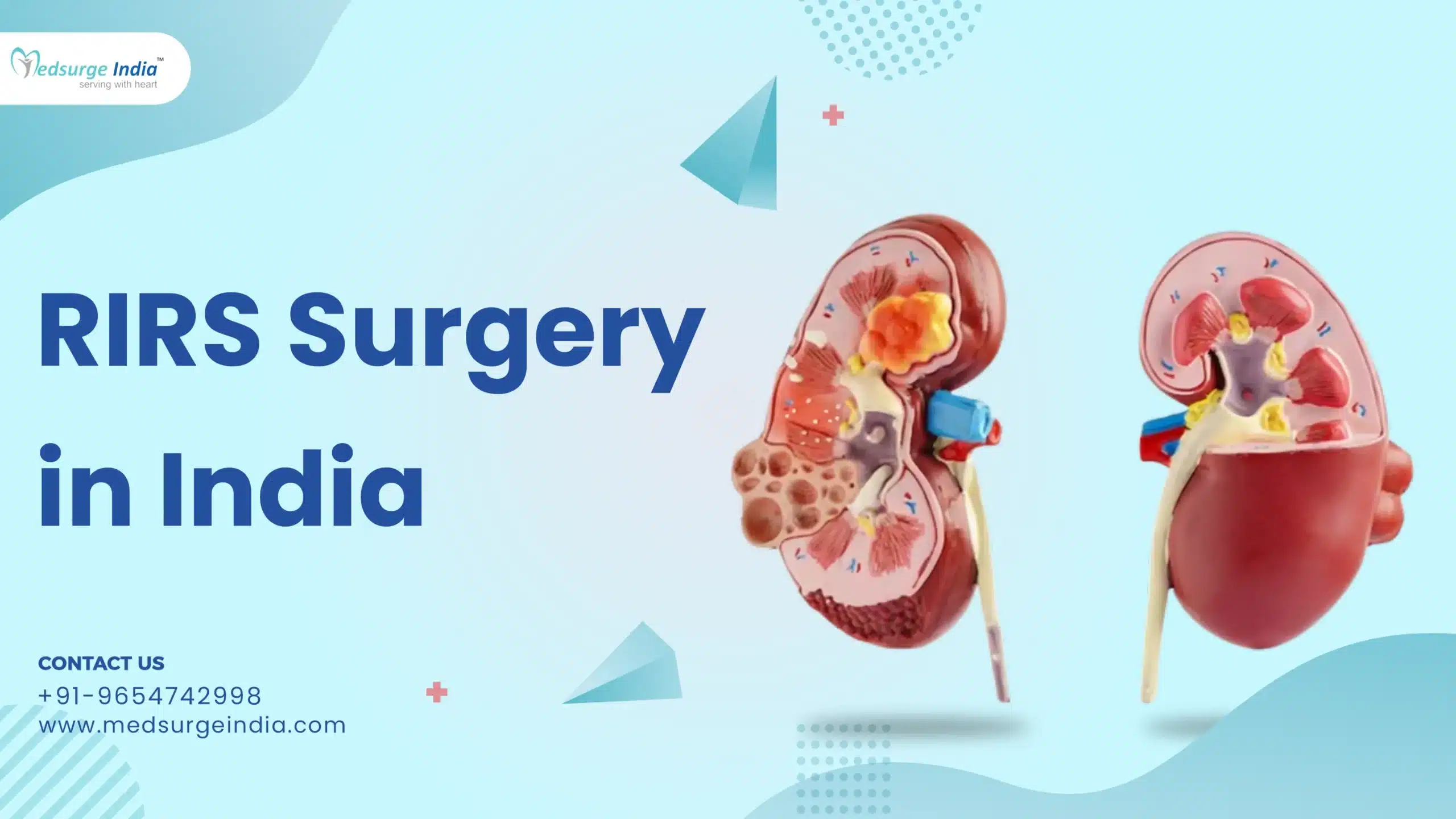
RIRS (Retrograde Intrarenal Surgery) employs the use of a laser and a fiberoptic endoscope, which is a flexible tube passed through the urethra to the kidney to treat stones without having to make any cuts on the organ. General, local, or spinal anesthetics are used while performing this operation. The surgery requires a specialist urologist who has had training in this type of procedure known as RIRS.
In the case of a big stone, an advanced treatment referred to as RIRS is employed. Basically, it is often considered to be the most preferable treatment for those patients whose stone size varies between 10mm and 14mm. Although shockwave lithotripsy and ureteroscopy may not work, RIRS is the most common method of removing kidney stones. Care should be taken when choosing a medicine or starting a treatment program after surgery because of the complications that may arise from those conditions if not discussed with the doctor. Several publications in international surgical journals recommend patients above 65 years to consult a urologist before choosing RIRS for the treatment of kidney stones.
The cost of treating RIRS surgery in India can fluctuate based on various factors. Typically, treatment expenses for RIRS surgery in India can range from as low as 900 USD to as high as 150 USD. The total cost of treatment is subject to change and may increase or decrease depending on the treatment approach chosen by the physician, along with the patient’s health condition and age.
| Country | Price Starting From |
| India | 100 USD |
| US | 450 USD |
| UK | 450 USD |
| UAE | 300 USD |
Some of the possible factors influencing RIRS surgery cost in India can be the following: several factors that do not fall under the pre-and post-treatment costs greatly influence your budget. The following are among the aspects that may influence RIRS surgery cost in India.
Trusted Care. Better Results.
Get advanced RIRS surgery in India with expert kidney stone specialists and complete patient support.

Before undergoing RIRS Surgery, the medical team advises patients to undergo specific diagnostic tests to evaluate various factors such as stone size and location, underlying health conditions, and overall well-being. All patients need to bring the results of these tests on the day of the surgery. The diagnostic tests commonly conducted before RIRS Surgery include:
For the management of complicated kidney stones, a sophisticated surgery known as RIRS is employed.
RIRS Surgery is a cutting-edge method for treating kidney stones, boasting a high rate of success. Here are several key advantages of RIRS Surgery:
– It is a minimally invasive procedure that does not require any incisions or sutures.
– The procedure is virtually painless and results in minimal blood loss.
– Recovery is fast and uncomplicated.
– Patients can resume their normal activities within a few days.
– This technique poses no risk to the renal tissue.
– The morbidity rate is exceptionally low.
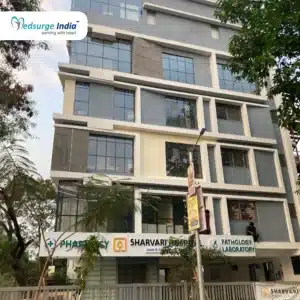
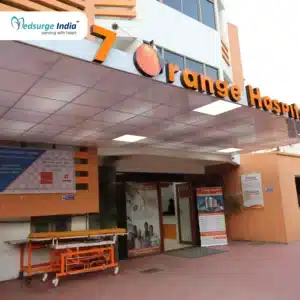
Indian medical facilities are known for their state-of-the-art technology and outstanding quality of patient services. Furthermore, these hospitals in India have received global recognition and are endorsed by international bodies for their high standards. Here is a list of the leading hospitals celebrated for their best care in India.
A: Retrograde intrarenal surgery (RIRS) is a technique for doing surgery on the kidney utilizing a flexible ureteroscope. The urethra, or urinary entrance, is used in RIRS to insert the scope into the bladder, and the ureter is used to insert the scope into the kidney's urine-collecting portion.
A: Following RIRS surgery, recuperation typically takes 24 to 48 hours, during which time one should rest completely. Drinking lots of fluids is necessary for patients to keep up their urine production.
A: Kidney stone extraction by retrograde ureteroscopic procedure is called Retrograde Intrarenal Surgery (RIRS Surgery). Surgeons create a passageway to the kidneys through the urethra during this operation. There are no incisions or holes made during this minimally invasive procedure.
A: Fifty percent of the time, those that are 5 to 7 mm (bigger than an eraser pencil but less than a green pea) can pass. Larger than 7 mm stones almost never pass by non-surgical means. If kidney stones are detected and treated promptly, there is typically little long-term harm.


Nephrologist
Senior Consultant
15+ Years
TX Hospitals, Uppal, Hyderabad
View Doctor
Nephrologist
Consultant
18+ years
Care Hospitals, Musheerabad, Hyderabad
View Doctor
Nephrologist
Senior Consultant
16+ years
Care Hospital, Health City, Visakhapatnam
View Doctor
Nephrologist
Consultant
15+ years
Care CIIGMA hospitals, dargarh road, Aurangabad
View Doctor


Nephrologist
Consultant
12+ years
Care Hospital, Banjara Hills, Hyderabad
View Doctor
Nephrologist
Clinical Director
34+ years
Care Hospital, Banjara Hills, Hyderabad
View Doctor
Nephrologist
Clinical Director and HOD
17+ years
Care Hospital, Bhubaneswar
View Doctor