Giving birth is an incredible experience for many women. Unfortunately, not every woman is able to encourage this...
Unlock Exclusive Discount : Your Gateway to Premium Healthcare with Medsurge India Health Value Card.

Tell us your medical concern — we'll match you with the best doctor for your case.
Response within 24 hours
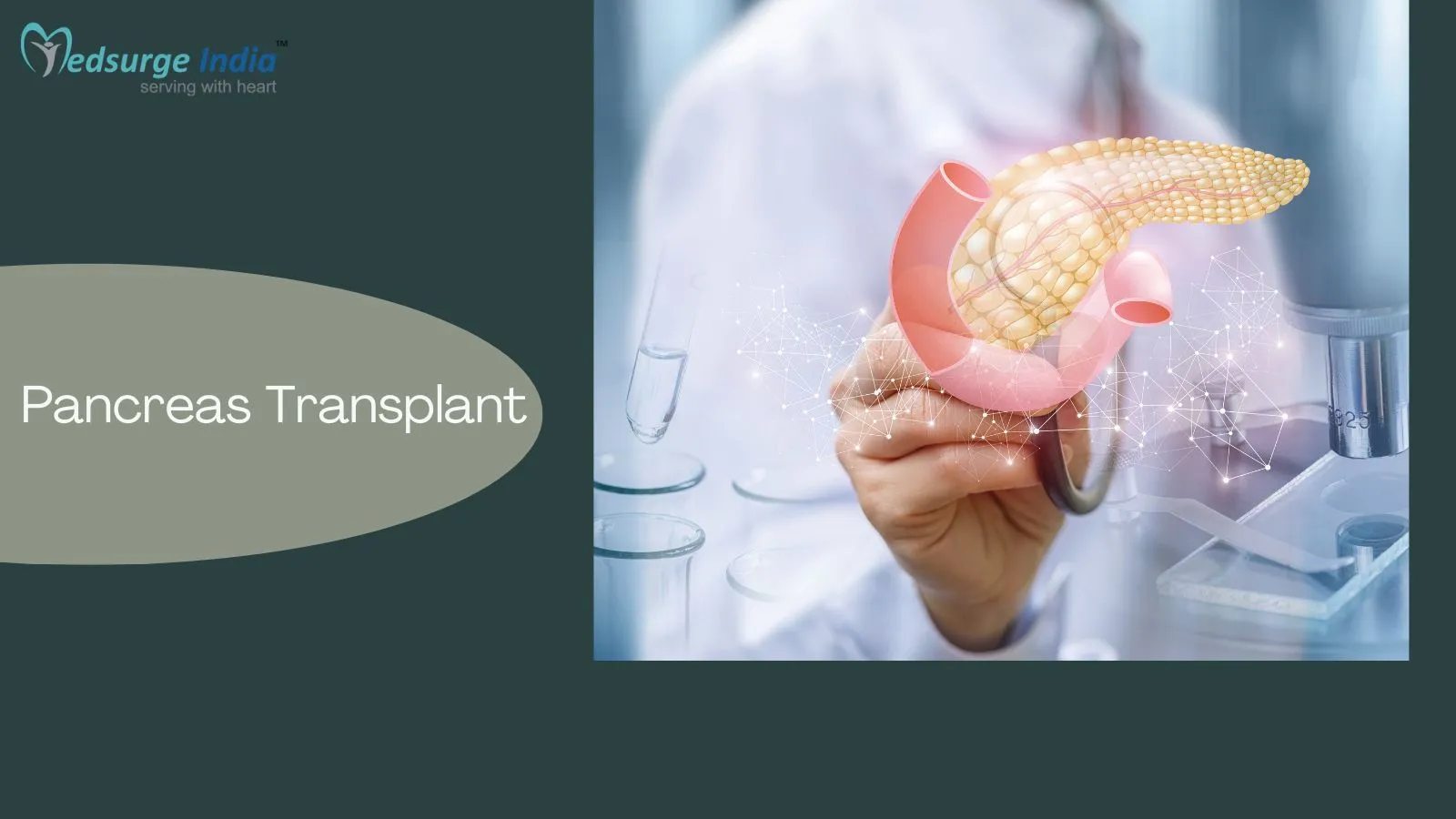
A Pancreas Transplant is a procedure that involves transplanting a healthy pancreas from a deceased donor into a person whose pancreatic is no longer functioning correctly.
The majority of Pancreas Transplantation in India are performed to treat type 1 diabetes. A pancreas transplant may be able to cure this medical condition. However, because the side effects of a pancreas transplant can be severe, it is normally reserved for people with severe diabetic issues.
The pancreas is a hand-sized organ that is placed in the abdomen near the stomach, intestines, and other organs. It occupies the space behind the stomach and front of the spine. The pancreas produces digestive juices as well as hormones such as insulin and glucagon, which helps the body maintain appropriate blood sugar levels and use and store energy from food.
A Pancreas Transplant in India is an organ transplant in which a healthy pancreas (one that produces insulin) is implanted into a person whose pancreas no longer produces enough insulin for the body. The healthy pancreas is derived from either a deceased donor or a partial pancreas from a living donor.
A pancreas transplant may be able to cure type 1 or insulin-dependent diabetes. A Successful Pancreas Transplantation in India will eliminate the need for insulin injections, reduce or eliminate diabetes-related food and physical activity restrictions, and minimize or eliminate the risk of severe low blood sugar reactions. A pancreas transplant can also help manage the damage to other organs, such as the kidneys, that type 1 diabetes might cause.
One of the most serious complications of Type 1 diabetes is kidney damage. The majority of persons who are candidates for a pancreas transplant also have renal failure. A pancreas transplant is frequently performed in combination with a Kidney Transplant in India.
A person with diabetes can begin to make insulin (insulin independence) with a healthy pancreas from a transplant.
Types of Pancreas Transplantation in India is classified as following:
1. Pancreas transplantation alone: People with diabetes who have early or no renal damage may be candidates for a pancreas transplant alone. A pancreatic transplant operation involves implanting a healthy pancreas into a recipient whose pancreas is no longer functional.

2. Combined kidney-pancreas transplant: For persons with diabetes who are at risk of renal failure, surgeons may perform combination (simultaneous) kidney-pancreas transplants. The majority of pancreas transplants are performed simultaneously with kidney transplants. The goal of this approach is to provide you with a healthy kidney and pancreas that are unlikely to contribute to future diabetes-related kidney impairment.
3. Pancreas-after-kidney transplant: If a living or deceased donor kidney becomes available after a long wait for both a donor kidney and a donor pancreas, a kidney transplant may be advised first. When a donor pancreas becomes available after you recover from kidney transplant surgery, you will be given a pancreas transplant.
4. Pancreatic islet cell transplantation: Insulin-producing cells (islet cells) extracted from a deceased donor’s pancreas are injected into a vein that leads to your liver during pancreatic islet cell transplantation. It is possible that more than one injection of transplanted islet cells will be required. Islet cell transplantation is being researched for those with substantial, progressing type 1 diabetes problems. It can only be done as part of a clinical trial approved by the Food and Drug Administration.
Candidates for Pancreas Transplantation in India usually have type 1 diabetes, combined with kidney dysfunction, nerve damage, vision issues, or another disease consequence. In general, healthcare practitioners consider a transplant for someone whose diabetes has progressed despite medical treatment. This is especially true if low blood sugar (hypoglycemia) has been a long-term issue. People with type 2 diabetes have also undergone pancreatic transplants. A pancreas transplant is also most effective in those who do not have heart or blood vessel disease. If you decide to get a pancreas transplant, you may be advised to quit smoking or lose weight before the procedure.
A Pancreas Transplant in India may be considered a possible treatment option if one or more of the following conditions apply.
Know More:- Pancreas Transplant Cost in India
If your doctor believes you are a candidate for a pancreas transplant in India, you will need:
Read more:- Living Donor Transplant in India
The patient will be expected to follow some instructions in the days coming up to the transplant, including:
Know More:- Best Transplant Doctors in India
If there are no complications, the prognosis following pancreatic transplantation is usually favorable. People can live for years, if not decades, after surgery. After five years, almost half of new pancreases are still functional. If a transplanted pancreas fails to function properly, a surgeon can remove and replace it. Following a transplant, you will be required to take immunosuppressant drugs for the rest of your life. They keep your body from attacking the new organ (a process known as rejection). These medications can have substantial negative effects, but you should not stop taking them without first consulting with your doctor.
Explore commonly performed treatment options and procedures for this speciality.
Giving birth is an incredible experience for many women. Unfortunately, not every woman is able to encourage this...
Intestine transplantation is a surgical treatment which is used to treat patients with intestinal failure and other issues...

Motherhood is one of the most desirable stages in a woman’s life. However, not everyone is fortunate enough...

